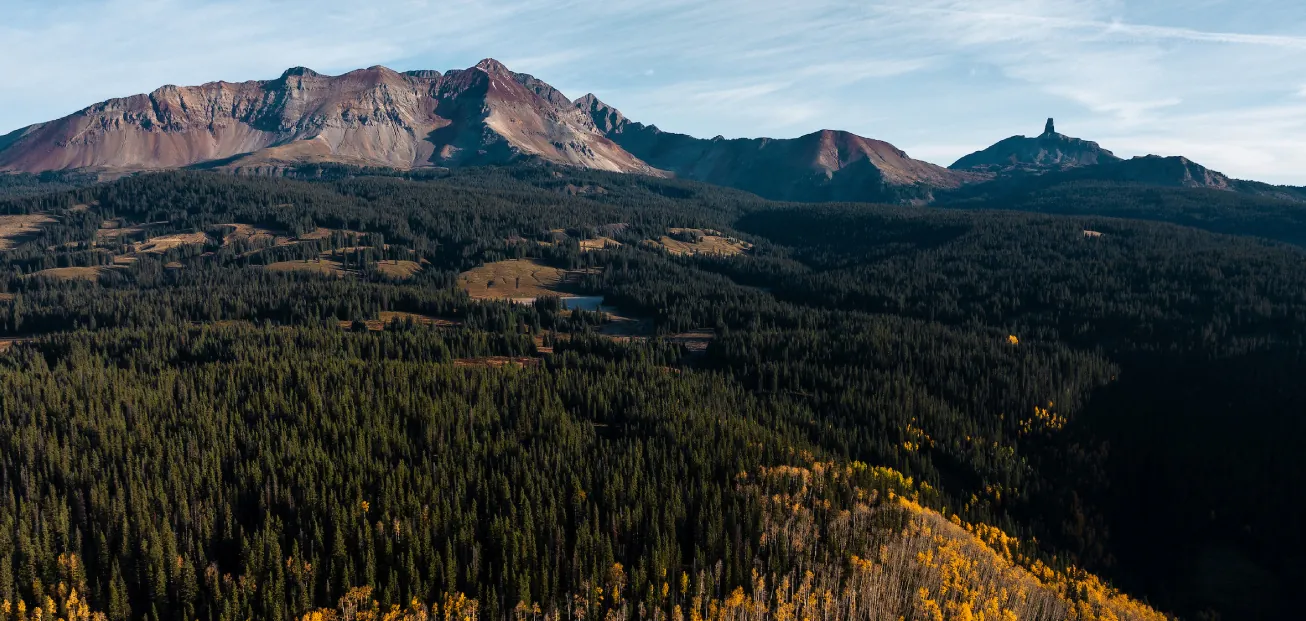
A 320 acre tract of forest and meadow known as Lizard Head Mesa, sitting directly south of the Lizard Head Wilderness and about a 20 minute drive from Telluride, has been taken off the development market for good. The Conservation Fund announced on November 12 that it has protected the property, and that the land will be transferred to the U.S. Forest Service and added to the San Juan National Forest.
The purchase closes off one specific future for the land. The Fund says the tract was the last private inholding in this portion of the national forest, and that conserving it prevents the potential development of nine luxury homesites there.
Matthew Tangeman, via The Conservation Fund
A parcel the Forest Service had already mapped
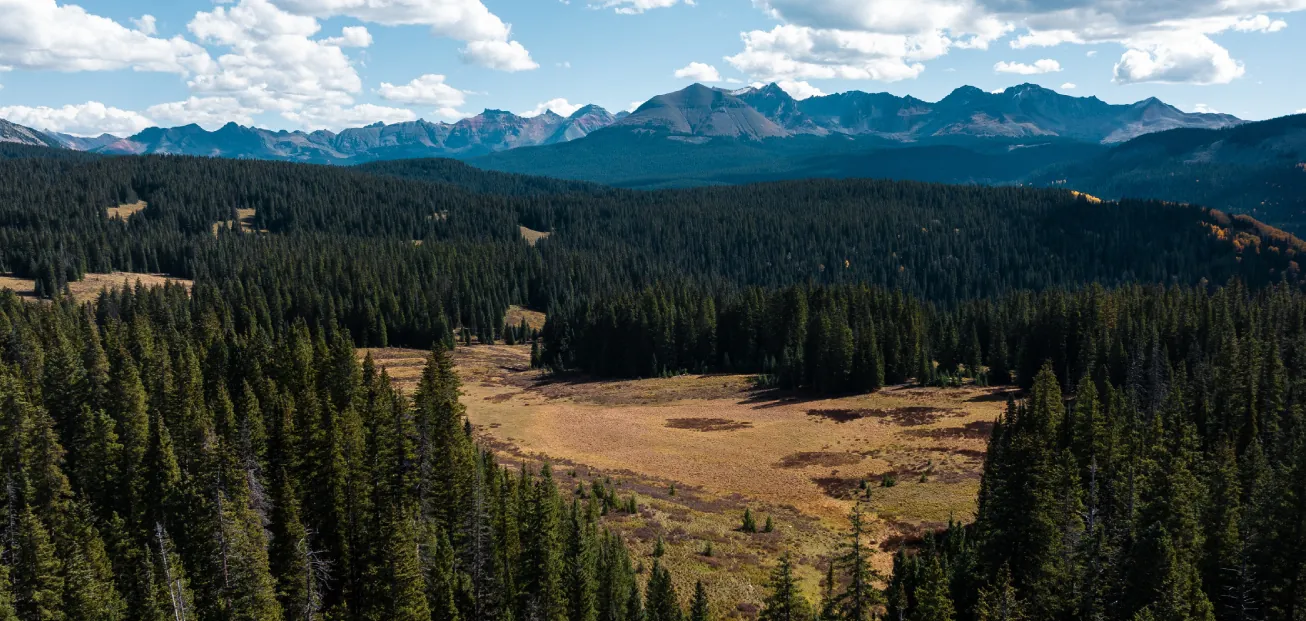
The acquisition did not come out of nowhere. In its land adjustment plan for fiscal year 2025, the San Juan National Forest described the Lizard Head Mesa purchase as an acquisition opportunity and a potential candidate for Land and Water Conservation Fund support, and noted that The Conservation Fund was then in negotiations with the landowner. The Forest Service described the parcel as a 313 acre private inholding surrounded by national forest land in the headwaters of the Dolores River watershed, used for hiking, camping, snowmobiling, hunting and fishing, and holding Canada lynx habitat and wetlands. The Fund's final announcement puts the protected acreage at 320.
Matthew Tangeman, via The Conservation Fund
Nick Mustoe, the Dolores District Ranger for the San Juan National Forest, said in the Fund's announcement: "This purchase fills in the map on one of the truly amazing places on the Dolores Ranger District." He added that the tract should draw hunters, mushroom foragers and backcountry travelers who prefer little used ground.
Habitat, and a landmark in the view
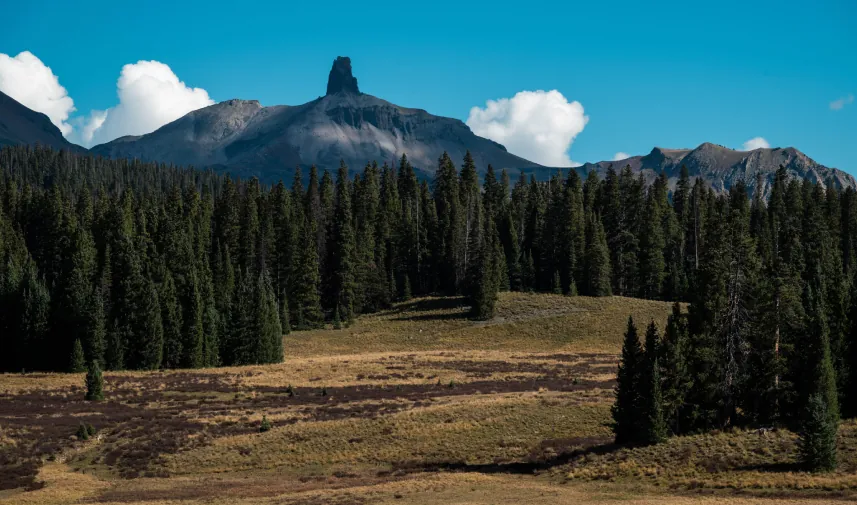
The Fund describes the mesa as habitat for golden eagles, elk and black bears, with Canada lynx also using its remote ground, and says protecting it keeps intact the views toward Lizard Head, the eroded remnant of an ancient volcano that the Fund identifies as an important cultural site for the Ute Tribe. Senator Michael Bennet, in the same announcement, pointed to the property's alpine meadows and old-growth spruce-fir and to the new hunting and recreational access the purchase provides near the wilderness.
The wilderness next door is the anchor of this landscape. The Forest Service puts the Lizard Head Wilderness at 41,496 acres astride the San Juan Mountains, 10 miles southwest of Telluride, within the Uncompahgre and San Juan National Forests. The wilderness takes its name from Lizard Head, a crumbling volcanic spire that rises 13,113 feet and is said to resemble the head of a lizard. The wilderness holds three fourteeners, Mount Wilson at 14,246 feet, El Diente Peak at 14,159 feet and Wilson Peak at 14,017 feet, and the headwaters of the west fork of the Dolores River.
Federal conservation money, and what happens next
The money came from the Land and Water Conservation Fund, the federal conservation program created in 1965 and given permanent funding under the Great American Outdoors Act of 2020. Instead of drawing on general tax revenue, the program channels a share of federal offshore energy receipts into conservation and recreation access projects. The Fund says the Lizard Head funding was secured with support from the Colorado congressional delegation representing the forest, Senators Michael Bennet and John Hickenlooper and Representative Jeff Hurd. In the announcement, Hickenlooper called public lands shared treasures passed down to future generations, and said the tract will protect clean drinking water for neighboring communities.
Justin Spring, the Fund's vice president and Colorado state director, called the mesa an extraordinary landscape that deserves to remain wild and undeveloped, and said protecting it conserves wildlife habitat and creates new access for backcountry recreation. Under Forest Service management, the Fund says, the property will join the connected network of protected public lands in the San Juans, offer new public access at the doorstep of the wilderness, and could in time be considered for inclusion in the Lizard Head Wilderness itself.