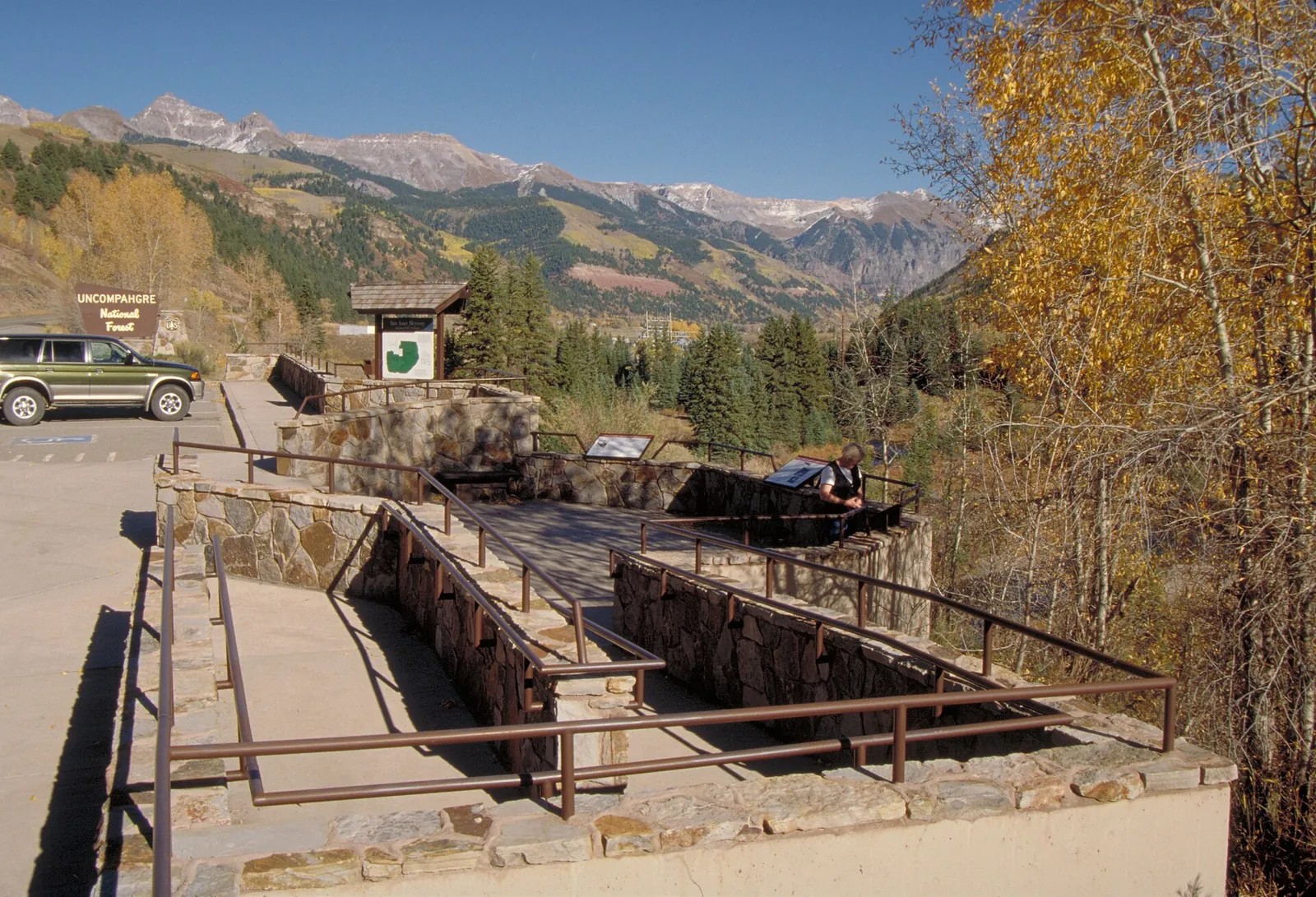
The Telluride Town Council meets on Tuesday, November 17, in Rebekah Hall at 113 West Columbia Avenue, and the agenda carries the decisions that close out the town's 2027 budget season. The public hearings on the 2027 budget, the mill levy and the capital program are scheduled for about 1:00 p.m. The meeting is hybrid, held in person and online, and the meeting packet is posted on the town's CivicWeb portal.
Two ordinance decisions sit alongside the budget itself. One would suspend, for 2027 only, the share of the real estate transfer tax that flows to the Open Space Fund. The other would add heat tape, outdoor heaters and gas firepits to the outdoor energy uses covered by the town's energy mitigation program.
Ken Lund, CC BY-SA 2.0, via Wikimedia Commons
The shape of the 2027 budget
The numbers before the council took shape at a budget workshop on October 1. The finance department's workshop memorandum put proposed General Fund expenditures for 2027 at $21.55 million against projected revenue of $19.74 million, with the difference, about $1.82 million, drawn from the fund balance.
Jerrye and Roy Klotz MD, CC BY-SA 3.0, via Wikimedia Commons
Sales tax revenue is projected to grow 3.2 percent over the 2025 audited actuals. Property tax revenue is projected to rise about 7 percent, and the memorandum attributes that increase to new construction activity since the last revaluation rather than to any increase in mills, calling the 7 percent the maximum allowed by the Town Charter. Taxes account for 61 percent of General Fund uses in the proposal, and the draw on the fund balance accounts for about 8 percent.
The council also acts Tuesday on the budget request of the Commission for Community Assistance, Arts and Special Events. For 2027 the commission asked the council to fund $277,415 in its Arts and Special Events category and $419,335 in Community Support, both recorded in the commission's packet as no increase. The finance department's workshop memorandum lists the Community Support figure at $419,435, $100 higher; the two town documents do not agree, and the adopted budget will settle which figure stands.
A one-year pause in the open space dedication
One ordinance on the agenda would suspend Section 4-3-30(b) of the Telluride Municipal Code for the 2027 fiscal year. That section dedicates 5 percent of the town's real estate transfer tax to the Open Space Fund. Under the suspension, that share would stay in the town's Capital Fund for one year instead, and the money would remain available to the capital program rather than to open space acquisition.
The ordinance's own history section traces the dedication back to November 2, 1993, when Telluride voters approved a ballot question dedicating 20 percent of unencumbered town revenue from sales and use taxes, the real estate transfer tax, property tax mill levies and business license fees to open space acquisition. Ordinance 1000, Series of 1994, codified the dedication in the Telluride Municipal Code. The fund went on to help acquire the Bear Creek Preserve and the Valley Floor, and about $20 million in public borrowing taken on for the Valley Floor acquisition was retired as of February 28, 2023.
In July 2023 the council reset the split, directing 15 percent of the tax to a Reserve Capital Improvement Fund while 5 percent continued to the Open Space Fund. The ordinance before the council on Tuesday would pause that remaining 5 percent, and it is written to apply to 2027 only.
Outdoor heat joins the energy code
The second ordinance is the second reading of amendments to the town's energy mitigation program, known as TEMP, which has been in place since 2010. TEMP addresses the outdoor energy uses of newly constructed buildings and buildings undergoing major renovations, measures the environmental impact of those uses, and requires the impact to be mitigated through renewable energy or fees charged in lieu. Outdoor pools, hot tubs, spas, snowmelt systems and heated garages are already covered. The amendments extend that list to gas firepits and outdoor fireplaces, to electric heaters used outdoors, including temporary units, and to heat tape.
The amendments also set a residential outdoor energy budget of 125 million BTU per year. Under the amendment, the town would not issue a permit for a covered outdoor use that would push a home over that cap, as set out in the ordinance's Exhibit A. A companion resolution amending the methodology for calculating the program's offset requirements and in-lieu fees was prepared to be considered alongside the ordinance, according to the staff memorandum. If adopted, the changes take effect on January 1, 2027.
The staff memorandum grounds the proposal in the town's Climate Action Plan inventory, which attributes 58 percent of community greenhouse gas emissions to buildings, and in the town's net zero target for 2040.
How to take part
The hearings are part of the council's regular Tuesday meeting in Rebekah Hall, with remote access posted with the agenda on the town's CivicWeb portal. The Telluride Tribune will report the council's votes in a follow-up story.