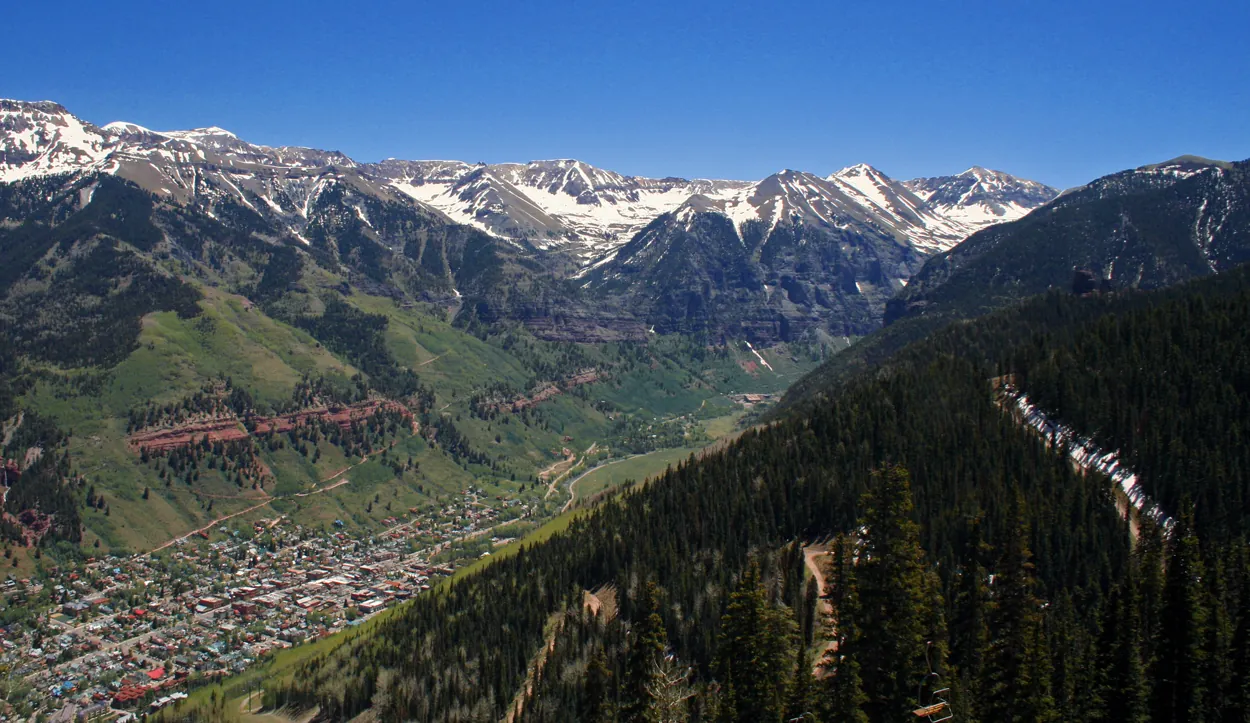
The gondola that stitches Telluride to Mountain Village is 30 years old, running at maximum capacity, and living on borrowed time. The current operating agreement expires December 31, 2027. After that, the San Miguel Authority for Regional Transportation, known as SMART, will operate and maintain the gondola as a public transit service. It is the biggest transit transition in the region's history, and the documents that describe it are public.
Start with the scale. Built in 1996 to connect the two towns and cut traffic and air pollution, the gondola now carries more than 3 million trips a year, according to SMART's fact sheet. On peak-season days it moves more than 20,000 riders, which the fact sheet calls one of Colorado's busiest transit lines. It is, SMART notes, the first and only fare-free gondola transit system in the United States.
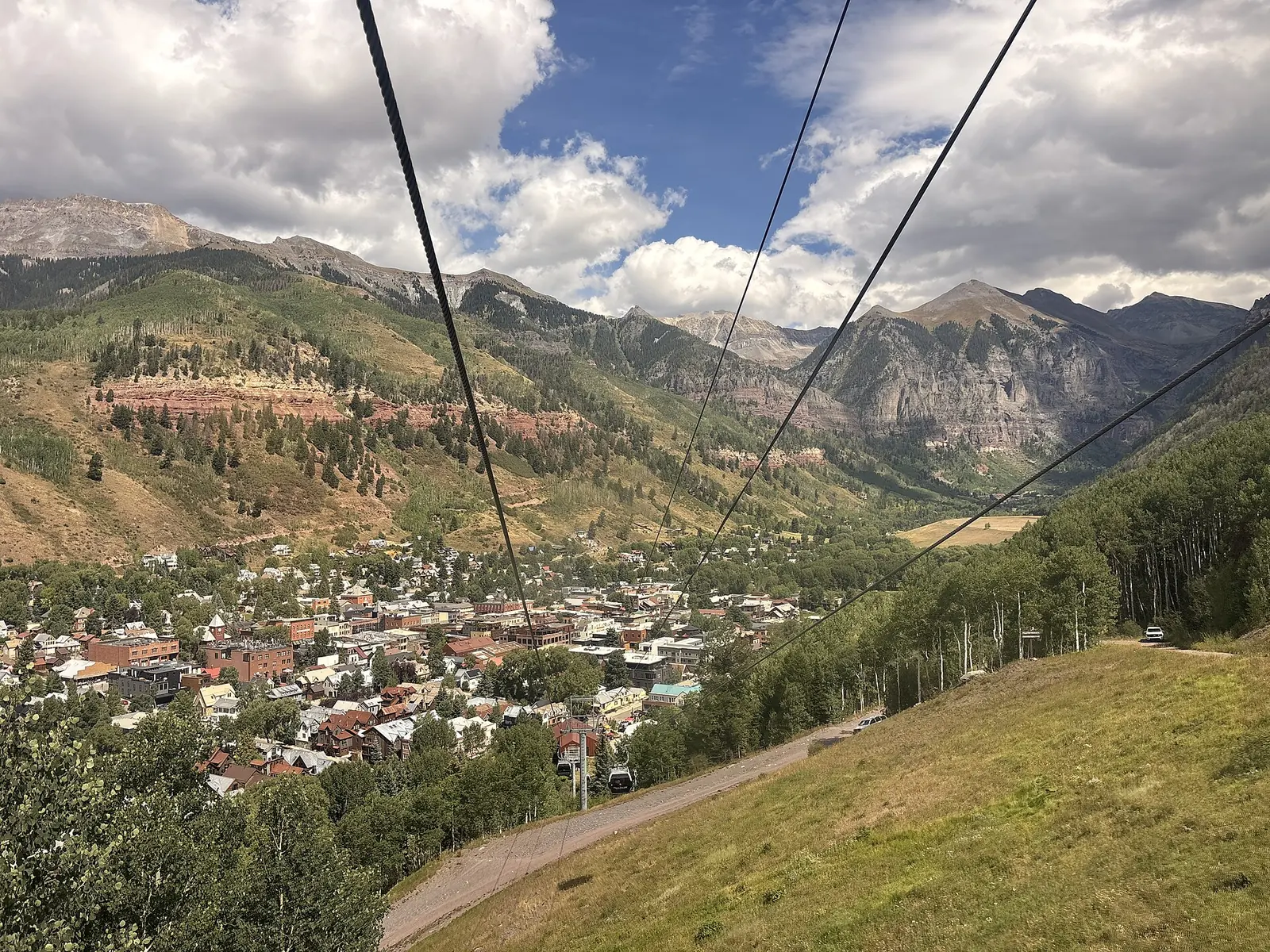
NatalieZavaleta, CC BY-SA, via Wikimedia Commons
It is also, by the authority's own account, worn out. The system is running the maximum number of cabins, 57, and SMART says it has reached the end of its designed lifespan. Wait times during peak seasons are described as substantial and getting longer, with waits of 90 minutes or more on the Fourth of July. Many replacement parts are no longer manufactured, which the fact sheet says leads to increased downtime and costs. Ridership is projected at roughly 4 million for 2037 against a system already at capacity.
Who runs it now, and who runs it next
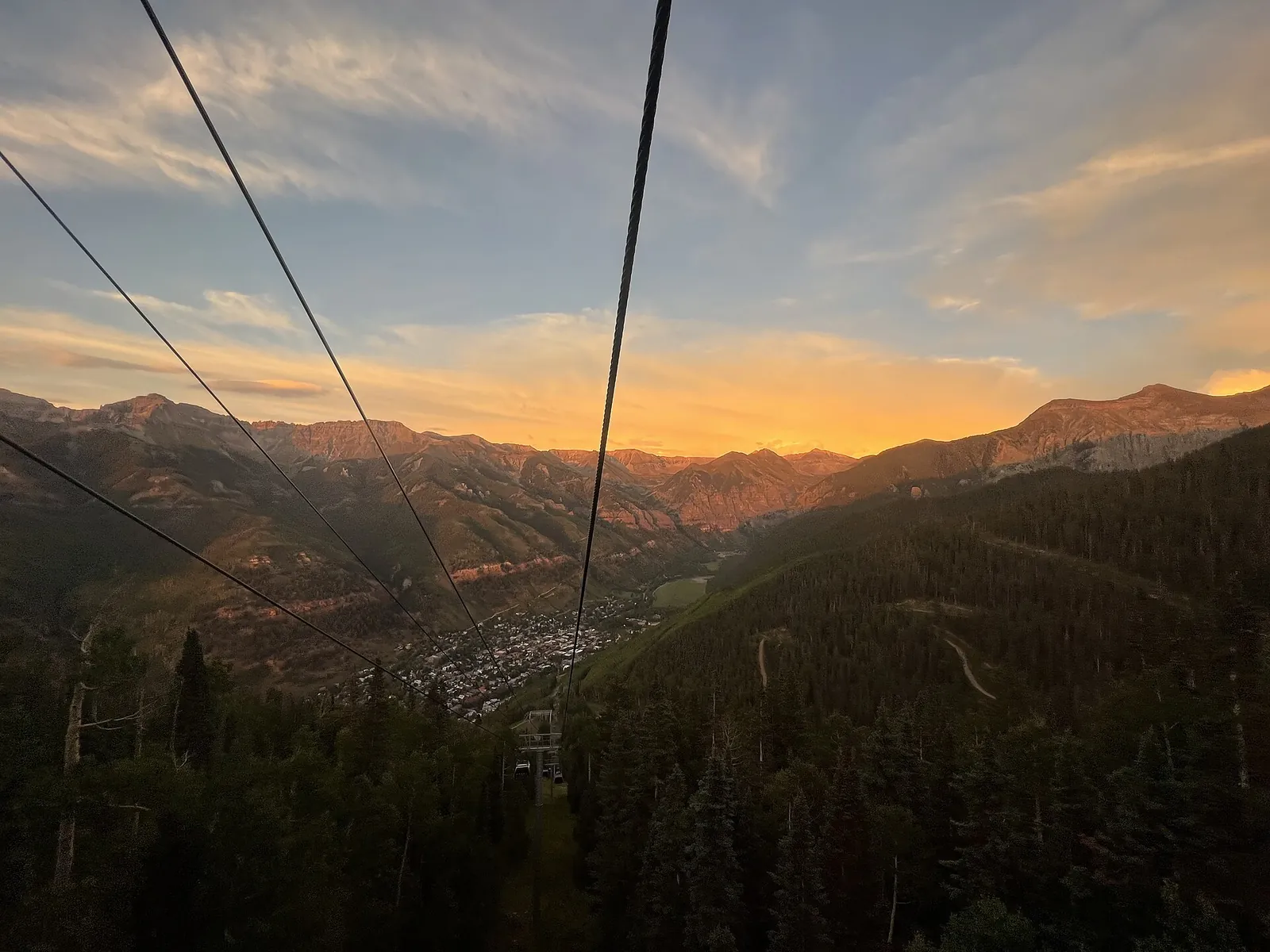
NatalieZavaleta, CC BY-SA, via Wikimedia Commons
The gondola is currently owned and operated by the Town of Mountain Village. That is a fact worth sitting with: a town of about 1,264 people (2020 census) runs one of the busiest transit lines in Colorado. The current operating agreement ends at the close of 2027, and SMART, the regional transit authority, takes over operations and maintenance as a public transit service.
The money for what comes next is already being collected. Voters passed two ballot initiatives, 3A and 2A, to continue gondola service after 2027. Funding collected in 2025, 2026 and 2027 is earmarked to sustain gondola operations after 2027, support a portion of a future system rebuild, and maintain and improve SMART's bus transit system for regional connectivity, according to the fact sheet.
Who rides it
The ridership mix explains why both towns treat the gondola as infrastructure rather than an amenity. Between 65 and 75 percent of riders are nonresidents, which SMART frames as traffic removed from the roads between and within both towns. Between 25 and 35 percent of trips are work or school related for locals. Ridership grew 32 percent between 2011 and 2017.
The planning roadmap in SMART's materials lays out three phases: assessing the current system's needs, project development around a new system, and the operations transition to SMART when the current agreement expires. The locally preferred alternative has long been a new system rather than a refurbishment, and construction has been contemplated from 2028. What that system looks like, what it costs, and who pays the remainder beyond the 3A and 2A revenues are the questions this paper will keep asking, document by document, as 2027 approaches.